


.webp)
Why This Matters To HPC Centers
Quantum computing development is not happening in a vacuum — it is being shaped by national strategies, institutional investments, and workforce development programs that will determine which regions and centers lead the integration of quantum into HPC. Understanding this landscape helps center directors position for funding, partnerships, and talent acquisition.
The Evidence Base
- "White House Drafting Executive Order to Reshape U.S. Quantum Policy” (The Quantum Insider)
- “EU Quantum Act Proposal Expected Q2 2026” (EU Quantum Act)
- “Quantum Sun Rises: Japan's Gambit for Leadership” (EETimes)
- “UK Signals "Quantum Decade" with New Investments at 2025 National Quantum Technologies Showcase” (UK Gov)
- "Revolutionizing Technology: Integration of HPC, AI, and Quantum Computing at JSC" — Jülich (LinkedIn)
- “Interview with Zach Yerushalmi, CEO, Elevate Quantum” (podcast)
- "SC25 conference highlights convergence of AI, quantum, and HPC" (Seeking Alpha)
- “Interview with Constanza Bustamante, Center for a New American Security (podcast)
- "Los Alamos National Laboratory establishes new Quantum Computing Focused Research Center" (The Quantum Insider)
- “QuEra Computing and Roadrunner Venture Studios To Bring Leading Quantum Platform to New Mexico” (QuEra)
Details
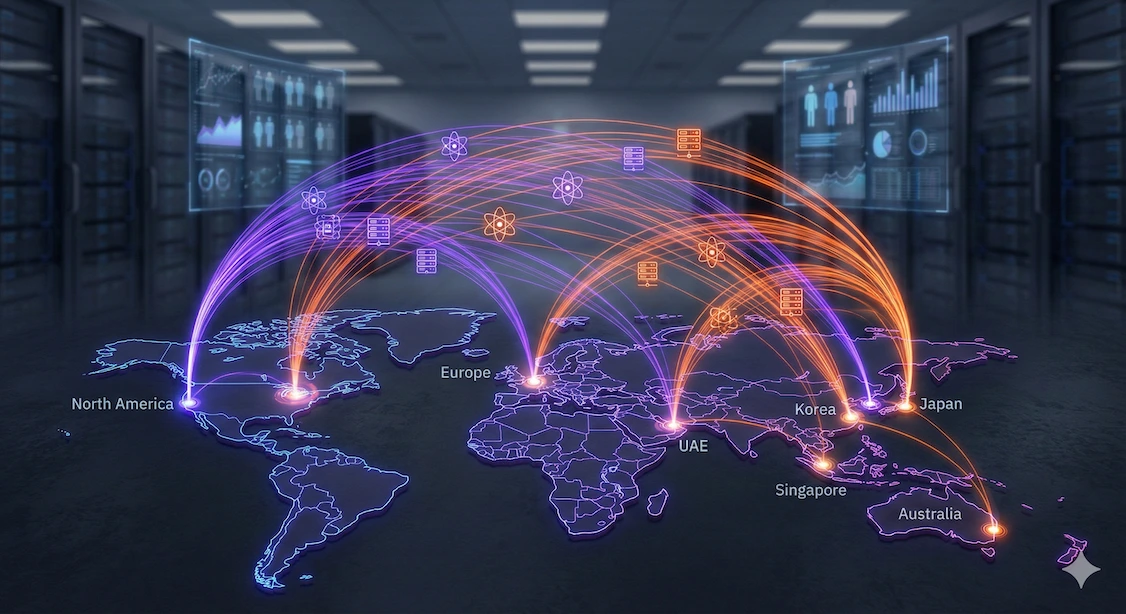
The institutional momentum behind quantum-HPC integration is accelerating on a global scale. Europe's Jülich Supercomputing Centre continues twith its integrated approach to HPC, AI, and quantum technologies through JUPITER and associated quantum systems. Los Alamos National Laboratory's establishment of a dedicated Quantum Computing Focused Research Center consolidates U.S. national lab quantum capabilities. And the SCA/HPC Asia 2026 conference in Osaka demonstrated that the CPU+GPU+QPU architectural vision has gone fully international, with 2,600+ participants from 45 countries engaging with the convergence agenda.
The conference landscape itself tells a story. SC25, HPC Asia 2026, and SCynergy 2026 all feature quantum computing prominently alongside traditional HPC and AI topics. The quantum sessions at these events are no longer fringe workshops — they are main-track content reflecting the community's recognition that quantum is a near-term planning consideration, not a distant horizon. The Romeo HPC Center's business-focused quantum event in France illustrates how this conversation is happening at regional HPC centers, not just flagship national facilities.
For HPC center directors, the strategic picture is clear: the quantum-HPC ecosystem is being built now through national investments, institutional commitments, vendor partnerships, and workforce development programs. Centers that participate in this ecosystem will be positioned to capture the value quantum delivers when fault-tolerant systems arrive. Those that treat quantum as someone else's problem will find themselves playing catch-up in an environment where the partnerships and expertise have already been claimed.
Read more about QuEra’s approach to national and regional programs here.