


.png)


.webp)
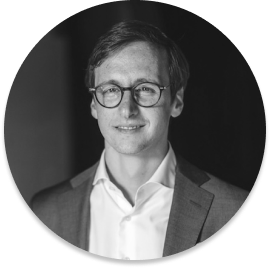
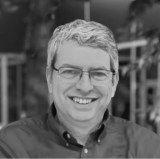
Mathematician Gil Kalai from Reichman University and the Hebrew University of Jerusalem is interviewed by Yuval Boger. Read the full transcript or listen to the episode at the Quantum Computing Report site here.
Here are the key points:
- Skepticism of Scalable Quantum Computing: Gil Kalai argues that large-scale fault-tolerant quantum computers may ultimately be impossible due to fundamental noise and complexity limitations.
- Correlated Noise Theory: Kalai explains his conjecture that entangled qubits may experience correlated errors, potentially preventing quantum error correction from scaling effectively.
- Limits of NISQ Devices: He discusses complexity-based arguments suggesting that noisy intermediate-scale quantum (NISQ) devices cannot achieve true quantum supremacy without fault tolerance.
- Quantum Supremacy Debate: Kalai examines experimental claims such as Google’s 2019 random circuit sampling result and explains why he believes these results require deeper scrutiny.
- Noise Reduction Challenges: According to Kalai, attempts to continuously reduce error rates may eventually hit a fundamental wall before scalable quantum computing becomes practical.
- Testing the Theory: The conversation explores what experiments could validate or refute Kalai’s conjectures regarding correlated noise and error correction.
- Implications for Physics: Kalai suggests that if scalable quantum computing fails, the outcome could still lead to important scientific discoveries in physics, computation, and complexity theory.
- Policy and Investment: While skeptical, Kalai supports continued research investment and believes experimental progress is necessary to test competing theories about quantum computing’s future.
Read the full transcript or listen to the episode at the Quantum Computing Report site here.




.webp)