



.webp)
Why This Matters To HPC Centers
For HPC center directors evaluating quantum, the most pressing question has shifted from "if" to "how." The integration of quantum processing units into existing HPC workflows, alongside CPUs and GPUs, is no longer a whiteboard exercise. It is happening at major supercomputing centers, and the architectural patterns are crystallizing. HPC centers that delay engagement risk falling behind on workforce development, software stack readiness, and vendor relationships that will determine competitive positioning over the next 3–5 years.
The Evidence Base
▸ "A demonstration of a multi-user, multi-QPU and multi-GPU hybrid classical-quantum supercomputing environment" (arXiv)
▸ “Navigating the Three Horizons of Quantum-HPC Integration” (QuEra)
▸ "Integrating quantum computing resources into scientific HPC ecosystems" (ScienceDirect)
▸ "A Hybrid Classical-Quantum HPC Workload" — Hewlett Packard Labs (arXiv)
▸ "A Full Stack Framework for High Performance Quantum-Classical Computing" — HPE (arXiv)
▸ Eight Steps to Quantum Readiness: What HPC Centers Need to Know(QuEra)
▸ "Scaling Hybrid Quantum-HPC Applications with the Quantum Framework" (arXiv)
▸ "QuEra to Showcase Quantum/Classical Integration at SC25" (QuEra)
▸ "Quantum–HPC Collaboration Underscores Growing Momentum for Hybrid Computing Ecosystems" — QuEra (LinkedIn)
Details
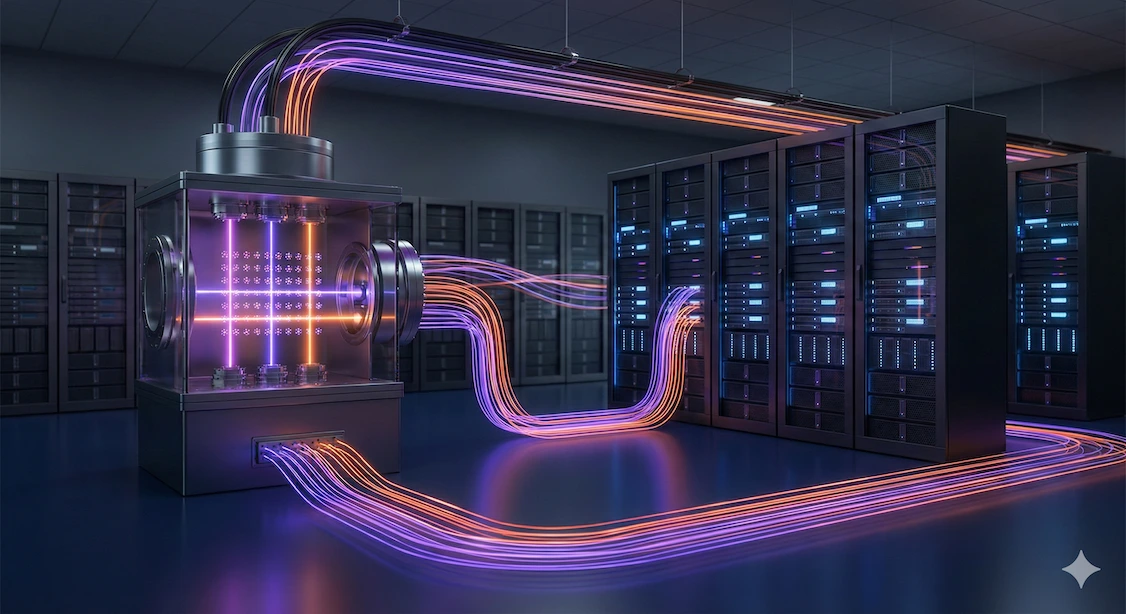
The dominant theme across this collection of articles is unmistakable: hybrid quantum-classical supercomputing architectures have moved from concept papers to working demonstrations. The articles show research teams and vendors that have built actual multi-user, multi-QPU environments where quantum resources operate alongside GPUs within existing HPC resource management frameworks.
The architectural model coalescing across these efforts treats quantum processors as specialized accelerators, analogous to the role GPUs play today. Papers from HPE and multiple academic groups describe full-stack software frameworks designed to schedule, execute, and manage hybrid workloads without requiring users to become quantum computing experts. The SC25 Birds of a Feather session on quantum-classical hybridization reflects the community's recognition that this integration challenge is now the central problem to solve, not qubit count alone.
For HPC centers, the implications are significant. Resource management systems like SLURM and PBS are being extended to handle quantum job scheduling. Middleware layers are emerging in an attempt to abstract hardware differences across quantum platforms. And the software stacks being developed provide on-ramps that do not require ripping out existing infrastructure. Centers like AIST (Japan), Jülich Supercomputing Centre (JSC) and Barcelona Supercomputing Center are already deploying quantum hardware alongside their flagship systems.
QuEra's reported collaboration with Dell underscores the commercial momentum here. Vendors are not just selling boxes. Rather, they are building integration partnerships with HPC centers to co-develop the software and operational practices that will define how quantum becomes a routine part of the supercomputing toolchain.
The message for HPC center leadership is clear: the integration playbook is being written now. Centers that engage with hybrid pilot projects today will build the institutional knowledge, staff expertise, and vendor relationships that position them to absorb quantum capacity effectively when fault-tolerant systems arrive. Waiting for "quantum to be ready" is not enough: the HPC side of the integration needs preparation too.
Learn more about QuEra’s approach to classical/quantum integration here.
.webp)